What Does the Pineal Gland Do

The most common question we hear is simple: "What exactly does my pineal gland do?"
The answer affects every single night of sleep you get, every mood swing you experience, and potentially every memory you're struggling to recall.
Your pineal gland is a rice-sized organ buried deep in the center of your brain. Ancient philosophers called it the "seat of the soul." Modern science calls it your body's master clock.
Both descriptions capture something true.

Your Pineal Gland: The Hormone Conductor
Here's what happens inside your brain right now.
Your pineal gland is reading light signals from your eyes, checking the time of day, and deciding whether to flood your body with melatonin or shut off production completely. This single decision cascades through every system in your body.
When darkness falls, your pineal gland activates. It starts producing melatonin, the hormone that makes you drowsy, repairs your cells while you sleep, and resets your entire biological clock.
When morning light hits your retinas, production stops. You wake up naturally, alert and ready.
This isn't just about feeling sleepy. Your pineal gland is orchestrating a complex biological symphony that most people never think about until something goes wrong.
The process works like this: light enters your eyes and hits specialized cells in your retinas.
These cells send signals to your hypothalamus, which acts like a relay station.
Your hypothalamus then communicates directly with your pineal gland through your sympathetic nervous system.
In darkness, your pineal gland releases melatonin into your bloodstream. Levels surge dramatically between 2-4 AM, keeping you in deep, restorative sleep stages.
At dawn, even dim light through your eyelids signals your pineal gland to stop producing melatonin. Production drops by up to 90%, allowing cortisol and other wake-promoting hormones to take over.
The Hidden Powers Beyond Sleep
Most people think the pineal gland only controls sleep. That's like saying your heart only pumps blood.
Your Reproductive Health Depends On It
Your pineal gland directly influences when puberty starts, how your reproductive hormones cycle, and even your fertility potential.
Research shows melatonin from your pineal gland regulates the release of luteinizing hormone and follicle-stimulating hormone from your pituitary gland. These hormones control everything from menstrual cycles to sperm production.
This explains why shift workers (whose pineal function is disrupted) often experience fertility issues and irregular cycles.
Why Mood Is Closely Linked to Pineal Function
People constantly ask us: "Why do I feel depressed when I can't sleep?"
The connection runs through your pineal gland. Melatonin isn't just a sleep hormone. It's one of the most powerful antioxidants your brain produces.
Studies have found that disrupted melatonin production correlates strongly with major depressive disorder, seasonal affective disorder, and anxiety disorders. When your pineal gland can't produce adequate melatonin, your neurons face increased oxidative stress.
That oxidative stress can strain neurons, disrupt neurotransmitter balance, and influence how the brain processes emotion over time.
Your Brain Cells Need Its Protection
Here's something that shocked researchers when they discovered it: melatonin crosses your blood-brain barrier easily and acts as a direct neuroprotectant.
It neutralizes free radicals that would otherwise damage your neurons. It supports mitochondrial function in your brain cells. It even helps remove beta-amyloid proteins associated with cognitive decline.
When your pineal gland produces optimal melatonin, your brain cells get powerful antioxidant protection every single night. When production declines, that protection disappears.
Your Immune System Takes Orders From It
Your pineal gland communicates constantly with your immune system through melatonin signaling.
Research demonstrates that melatonin influences immune cell production and activity, particularly T-cells, natural killer cells, and cytokine production. When your circadian rhythm is disrupted, your immune response weakens measurably.
This connection explains why people who work night shifts get sick more often and why poor sleep increases infection risk.
What Destroys Pineal Function
We hear three questions more than any others:
"Why did my sleep get worse?"
"Why can't I think clearly anymore?"
"Why do I feel off?"
The answer often traces back to pineal gland dysfunction.
Calcification: The Silent Epidemic
The biggest threat to your pineal gland isn't disease. It's calcification.
Studies using CT scans and MRI imaging have found pineal calcification in 40-60% of adults, with rates climbing dramatically after age 40. Some researchers have found calcification deposits in people as young as their twenties.
These calcium phosphate crystals accumulate inside your pineal gland like sediment in a pipe. As deposits build up, melatonin production declines progressively.
The calcification process accelerates with fluoride exposure, certain dietary deficiencies, chronic inflammation, and simply aging. Some studies suggest heavily calcified pineal glands produce up to 80% less melatonin than healthy glands.
That's not a minor drop. That's the difference between deep, restorative sleep and lying awake at 3 AM watching the ceiling.
The Blue Light Disaster
Your pineal gland evolved over millions of years to respond to natural light… sunrise, sunset, firelight.
Then we invented LED screens, smartphones, and 24-hour lighting. Your pineal gland has no idea what to do with blue light at 11 PM.
Research shows that even 30 minutes of blue light exposure before bed can suppress melatonin production by up to 50%. Two hours of screen time can delay your circadian rhythm by up to 3 hours.
You're essentially jet-lagging your pineal gland every single night.
When Physical Problems Develop
Rarely, cysts or tumors develop in the pineal region. These account for less than 1% of brain tumors, but they can cause significant disruption to hormone production, sleep patterns, and even vision.
Symptoms often include persistent sleep disturbances, unexplained hormonal changes, headaches, and difficulty with eye movements. These require immediate medical evaluation.
How to Restore and Protect Your Pineal Gland
The question everyone asks: "Can I reverse the damage?"
The answer is yes, if you act strategically.
Master Your Light Exposure
Get bright natural light within 30 minutes of waking.
This sets your circadian rhythm powerfully.
Then create absolute darkness for sleep. Even small amounts of light (from alarm clocks, streetlights, or electronics) can disrupt melatonin production.
Use blue-blocking glasses 2-3 hours before bed. Studies show these can restore up to 58% of melatonin suppression caused by screens.
Timing Is Everything
Your pineal gland craves consistency.
Go to bed and wake at the same time daily, even on weekends.
Eat meals on a regular schedule. Your digestive system communicates with your pineal gland through complex feedback loops that reinforce circadian rhythm.
Strategic Nutritional Support
Your body needs specific nutrients to produce melatonin efficiently. Tryptophan serves as the building block. It converts to serotonin during the day, then to melatonin at night.
But here's what most people miss: supporting your pineal gland requires more than just melatonin precursors.
You need compounds that protect against calcification, support healthy pineal tissue, and optimize the gland's natural function. This is where comprehensive formulations designed specifically for pineal health make a difference.
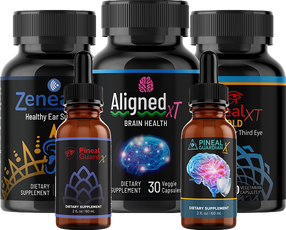
Pineal Guardian X: Comprehensive Pineal Support
For people looking to support pineal health beyond lifestyle and light management, nutritional strategies are often explored as a complementary approach.
We developed Pineal Guardian X after analyzing exactly what a calcified, underperforming pineal gland needs.

The formula combines nine ingredients that work synergistically to support pineal function: Pine Bark Extract provides powerful antioxidants that cross the blood-brain barrier. Tamarind helps address calcification concerns. Chlorella supports natural detoxification processes.
Ginkgo Biloba enhances cerebral blood flow, ensuring your pineal gland gets optimal oxygen and nutrients. Lion's Mane Mushroom supports overall brain health and neuroplasticity.
Bacopa Monnieri, Moringa, and Neem provide additional neuroprotective compounds. Spirulina delivers dense nutrition that supports cellular function.
The liquid delivery system ensures superior absorption compared to capsules or tablets. When your pineal gland is struggling with calcification and age-related decline, bioavailability matters tremendously.
Most importantly, Pineal Guardian X addresses pineal health from multiple angles, supporting melatonin production, protecting against oxidative stress, and potentially helping address calcification over time.
Why Your Pineal Gland Matters More Than You Think
Your pineal gland does far more than regulate sleep.
It coordinates your circadian rhythm, protects your brain cells from oxidative damage, influences your reproductive hormones, regulates your mood, and communicates with your immune system.
When it functions optimally, you experience deep sleep, mental clarity, emotional balance, and robust health.
When calcification sets in or modern life disrupts its function, everything suffers. Your sleep deteriorates. Your mood becomes unstable. Your memory falters. Your immune system weakens.
The good news? Your pineal gland responds to the right support.
Protect it from blue light. Give it consistent timing. Support it with targeted nutrition. Create the conditions for optimal melatonin production.
Because this tiny pine cone-shaped gland in the center of your brain isn't just controlling your sleep. It's conducting the entire orchestra of hormones, neurotransmitters, and biological rhythms that determine how you feel, think, and function every single day.