Why is Melatonin Important for Brain Health?

Most people know melatonin as the "sleep hormone." But that's only scratching the surface of what this remarkable molecule does for your brain.
While melatonin certainly helps regulate your sleep-wake cycle, neuroscientists have discovered it plays an even more critical role in protecting your brain from the damage that leads to memory loss, brain fog, and neurodegenerative diseases.
Think of melatonin as your brain's nighttime maintenance crew. When darkness falls and your pineal gland releases melatonin into your system, it doesn't just make you drowsy. It activates comprehensive repair and protection processes throughout your entire brain.
Here's what the research shows.
Your Brain's Nightly Waste Clearance System
Every single day, your brain accumulates waste products from normal neural activity. Damaged proteins, metabolic byproducts, and cellular debris build up between brain cells.
Melatonin enhances this cleanup process through what's called the glymphatic system, essentially your brain's waste removal service.
Research from the University of Rochester (Xie et al., Science 2013, DOI:10.1126/science.1241224) first demonstrated that the glymphatic system works primarily during sleep to flush toxins out of brain tissue. A recent 2025 study by Chen et al. (PMC11843476) confirmed that melatonin specifically improves glymphatic function, showing enhanced waste clearance in intracerebral hemorrhage models and aiding cognitive recovery.
When melatonin levels are depleted, this clearance system becomes impaired. The accumulation of waste products correlates with the onset of brain fog and memory difficulties that many people experience.
Melatonin's Antioxidant Defense
Your brain faces constant oxidative stress from unstable molecules called free radicals that damage cellular structures, breaking down the delicate machinery that allows neurons to communicate.
Melatonin acts as one of your brain's most effective antioxidants.
Research published in the Journal of Pineal Research shows that melatonin crosses the blood-brain barrier readily, positioning it to neutralize free radicals directly at the site of potential damage.
This protection becomes increasingly important with age. As we get older, our brains produce fewer endogenous antioxidants. Lower melatonin levels allow oxidative damage to accumulate more rapidly, potentially accelerating cognitive decline.
Inflammation Control
Chronic brain inflammation disrupts normal neural function and contributes to memory problems and neurodegeneration.
Melatonin demonstrates anti-inflammatory properties by reducing pro-inflammatory cytokines that damage brain tissue.
A Harvard Medical School study found that people with lower melatonin levels showed elevated markers of neuroinflammation, creating a cycle where inflammation disrupts sleep quality, which further reduces melatonin production, allowing more inflammation to develop.
When melatonin levels drop, many people also report that stress affects them more intensely, emotional regulation becomes more difficult, and patience wears thin more quickly.
Restoring healthy melatonin levels may help interrupt this inflammatory cycle and support better cognitive function.
Memory Consolidation and Neuroplasticity
Your ability to form new memories depends on neuroplasticity—your brain's capacity to create new neural connections and strengthen existing ones.
This process occurs primarily during deep sleep stages, when your brain consolidates experiences into long-term memories. Melatonin doesn't just facilitate sleep onset; it enhances the quality of sleep stages where memory consolidation occurs most effectively.
Research from the University of Texas found that people with healthy melatonin levels performed significantly better on memory tests than those with depleted levels. The critical factor wasn't total sleep duration but rather sleep architecture quality and the brain's efficiency in processing and storing information during rest.
A British Geriatrics Society review (2022) found moderate evidence that melatonin supplementation modestly improves sleep efficiency in mild cognitive impairment and Parkinson's disease patients, though effects on memory consolidation require further study.
Potential Protection Against Neurodegeneration
Perhaps most intriguing is melatonin's potential role in protecting against neurodegenerative conditions like Alzheimer's disease, though this area requires careful interpretation.
Multiple observational studies have found that people with Alzheimer's tend to have significantly lower melatonin levels than healthy adults of similar age. A 2024 meta-analysis by Zhang (Nature s41380-024-02691-6) suggests preventive potential through anti-amyloid effects, though most evidence comes from preclinical animal models rather than human trials.
Melatonin appears to help clear beta-amyloid plaques, the protein tangles that accumulate in Alzheimer's patients' brains, in laboratory and animal studies. However, a 2025 review by Leung (PMC12581400) found no overall cognitive benefit from melatonin supplementation in established Alzheimer's disease, though modest improvements appeared in mild cognitive impairment cases over 13-24 weeks.
Melatonin also protects mitochondria inside brain cells… the energy generators for neural activity. When mitochondria fail, neurons die. Melatonin helps maintain mitochondrial efficiency, supporting neuronal energy production and survival.
The Pineal Gland Connection
Your pineal gland, a small organ in the center of your brain, produces most of your body's natural melatonin.
This gland is susceptible to calcification, where mineral deposits gradually accumulate in the tissue and potentially reduce its function. A 2019 study by Joo et al. (PMC6624939) found associations between pineal calcification, lower melatonin levels, and increased Alzheimer's disease risk, though causation hasn't been definitively established.
Several factors may contribute to pineal calcification: environmental exposures (including fluoride), chronic stress, artificial light at night, and aging. When pineal function becomes compromised, melatonin production typically decreases, potentially leaving the brain more vulnerable to oxidative damage, inflammation, and disrupted sleep quality.
Supporting Pineal Function Naturally
While calcification correlates with age-related melatonin decline and cognitive risks, strong evidence for reversal in humans remains limited.
However, several strategies may support healthy pineal function:
Minimize fluoride exposure: Limited human data exists, though rodent studies suggest accumulation in pineal tissue. Consider water filters if concerned.
Circadian hygiene: Dimming lights after sunset and avoiding blue light exposure can boost natural melatonin production by 20-50%. This aligns with your body's natural rhythms.
Stress reduction: Meditation and breathwork lower cortisol levels, which can inhibit melatonin production. These practices support overall pineal health.
Key nutrients: Boron (3-6mg daily), magnesium, and vitamin K2 show preliminary promise for supporting mineral regulation in animal models, though randomized controlled trials in humans are lacking. Spirulina provides tryptophan, a melatonin precursor. Iodine and certain mushroom extracts offer antioxidant support.
Nootropic synergy: Compounds like Bacopa Monnieri and Ginkgo Biloba, which support circulation and neuroplasticity, may complement melatonin's protective effects.
Prioritize lifestyle modifications as your foundation, with targeted supplementation serving as a potential bridge. Track your progress through sleep quality improvements and cognitive function changes.
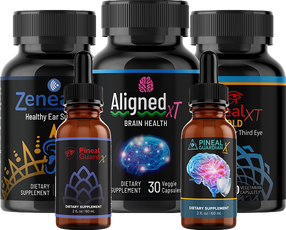
Pineal Guardian X: It’s formulated to address pineal gland health with combined researched ingredients targeting calcification. These include Boron and Lemon Juice Powder (which help regulate mineral deposits), Spirulina (providing tryptophan for melatonin synthesis), Lion's Mane mushroom (supporting overall brain function), and Chlorella (assisting with detoxification).

By addressing potential calcification and toxic buildup rather than simply adding external melatonin, these approaches aim to restore the pineal gland's natural production capacity.
What This Means for Your Cognitive Health
Understanding melatonin's neuroprotective role changes how we approach cognitive aging.
The issue isn't solely about getting older.
It's about whether your brain maintains adequate melatonin levels to support glymphatic clearance, control oxidative stress and inflammation, enable proper memory consolidation, and potentially reduce neurodegeneration risk.
People who maintain healthy melatonin production patterns throughout life tend to show better cognitive function as they age, experiencing less brain fog and maintaining sharper memory performance.
The challenge is that modern life often works against healthy melatonin production: bright screens before bed, irregular sleep schedules, chronic stress, and environmental exposures all potentially disrupt the systems your brain relies on for protection.
A healthy brain starts with healthy sleep. And healthy sleep depends significantly on melatonin.
For those experiencing memory concerns, concentration difficulties, or simply wanting to protect cognitive function proactively, addressing pineal gland health offers a research-informed approach.
By supporting your body's natural melatonin production rather than relying exclusively on external supplementation, you're working with your brain's inherent protective mechanisms.
Your brain needs melatonin for optimal function. With adequate levels, you support the neuroprotective processes that help maintain cognitive vitality throughout life.